Tag Persistence and Scan Modes
Tag States A and B
During a scan, RFID tags transition between two primary states:
State A (Not Charged): The tag is at rest and ready to be read.
State B (Charged): The tag has been energized and read by the scanner.
Once a tag is scanned and enters State B, it must fully discharge and return to State A before it can be accurately registered in a new, distinct scanning session. The time required for this transition is known as the persistence or "cooldown" period.
Selecting the Appropriate Scan Mode
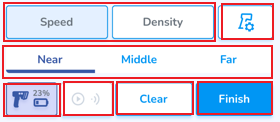
To manage this charging cycle effectively, your system provides two scanning modes: Speed and Density.
Speed Mode
The mode is designed for rapid, continuous scanning operations.
Functionality: The scanner charges tags for a minimal, unnoticeable duration.
Benefit: Because the charge is brief, tags discharge almost instantly, eliminating the cooldown period. This allows you to conduct back-to-back scan sessions without delay.
Recommended Use: Ideal for standard daily operations where wait times are undesirable, such as quick spot-checks or rapid order processing.
Density Mode
The mode is designed for thoroughness and high-volume scanning in crowded environments.
Functionality: The scanner applies a longer charge to the tags to capture a higher volume of data within a single session.
Benefit: Maximizes the number of tags read, ensuring comprehensive capture even in dense or tightly packed areas.
Requirement: Because the tags receive a longer charge, they require approximately 5 minutes to discharge and return to State A. Initiating a new scan before this cooldown completes may result in unread tags.
Recommended Use: Best suited for comprehensive audits, cycle counts, or scanning densely packed pallets. It can also be used effectively as a control scan when performing an Audit. You must plan for the 5-minute wait time between scans in the same area.
Configuring Scan Settings
You can toggle between Speed and Density modes directly within the application interface: