Handheld Readers
- TSL 1128
- TSL 1166
- TSL Readers - Update Firmware
- Installing VCP Drivers - Windows for ARM
- TSL 2128P
- All-in-one Reader
TSL 1128
TSL 1166
TSL Readers - Update Firmware
Updating the firmware on your TSL handheld reader can improve the performance of your scans, as well as ensuring you have important fixes that have been pushed by the manufacturer.
If you are using Windows for ARM, you need to install extra drivers. Click here for instructions.
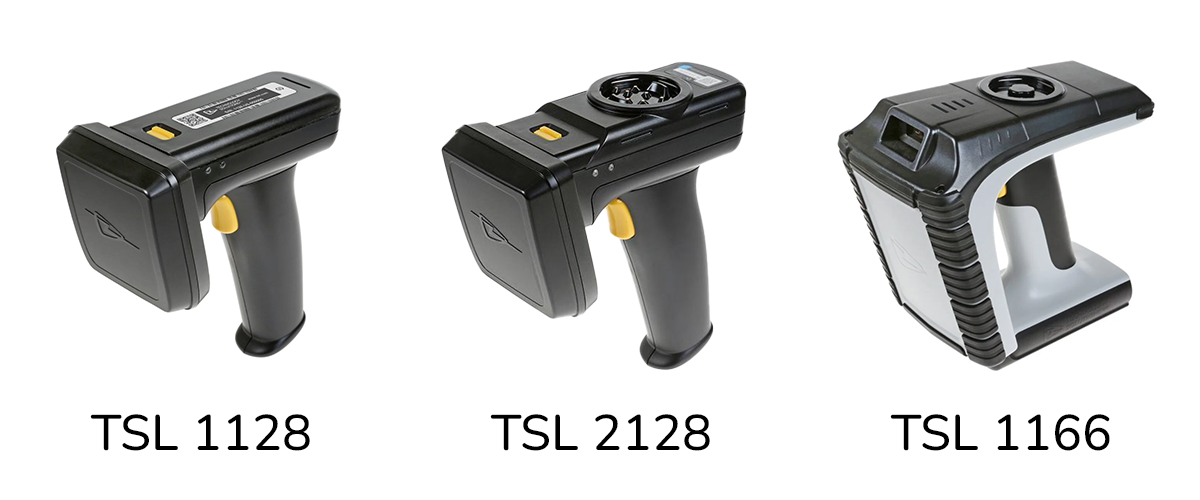
Requirements:
- TSL Reader with battery installed and at least partially charged
- PC or tablet running Windows 10 or higher
- For TSL 1128:
- Included Micro-USB cable to connect the reader to your PC
- For TSL 2128:
- Included docking cradle
- Included Mini-USB cable to connect the docking cradle to your PC
- For TSL 1166:
- Included docking cradle
- Included Mini-USB cable to connect the docking station to your PC
You may be able to use a cable that was not included with your scanner; however not all cables can transmit data.
Step 1 - Download the Desktop Firmware Loader, and firmware for your reader
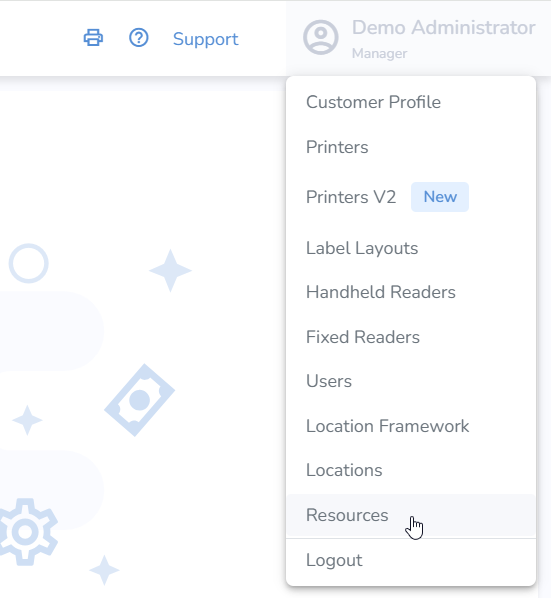
On the web portal, click your account name at the top-right of the page and select Resources
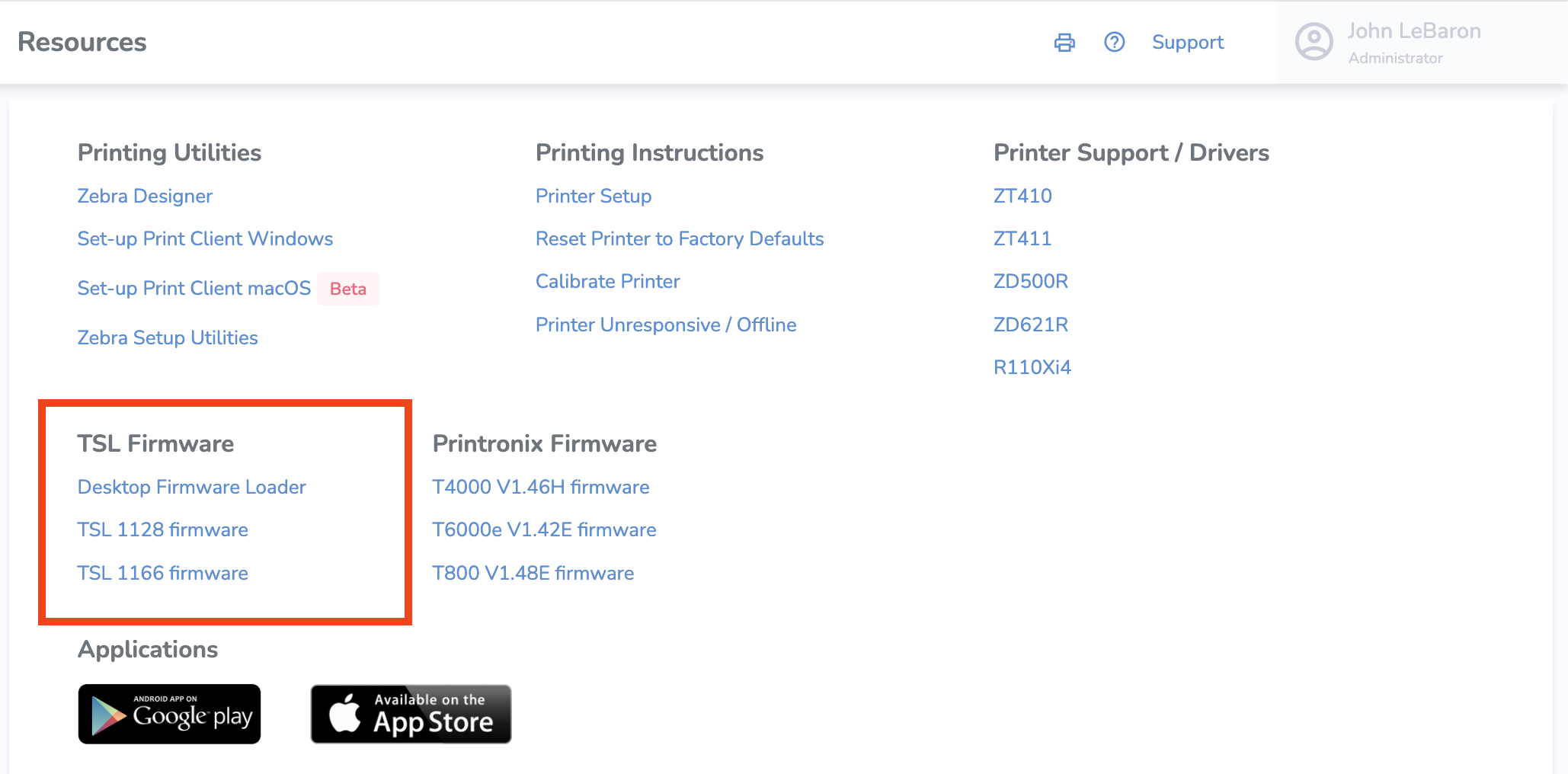
In the "TSL Firmware" section, click "Desktop Firmware Loader," then click the TSL Firmware link that corresponds with your reader:
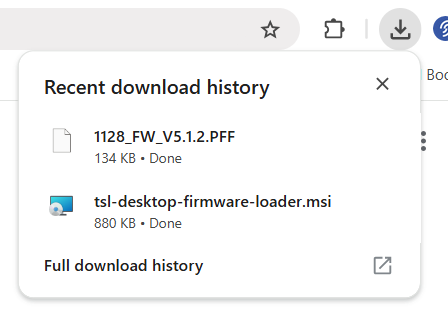
The Firmware Loader installer will be a .msi file, and the firmware itself will be a .pff file.
Step 2: Install the Desktop Firmware Loader
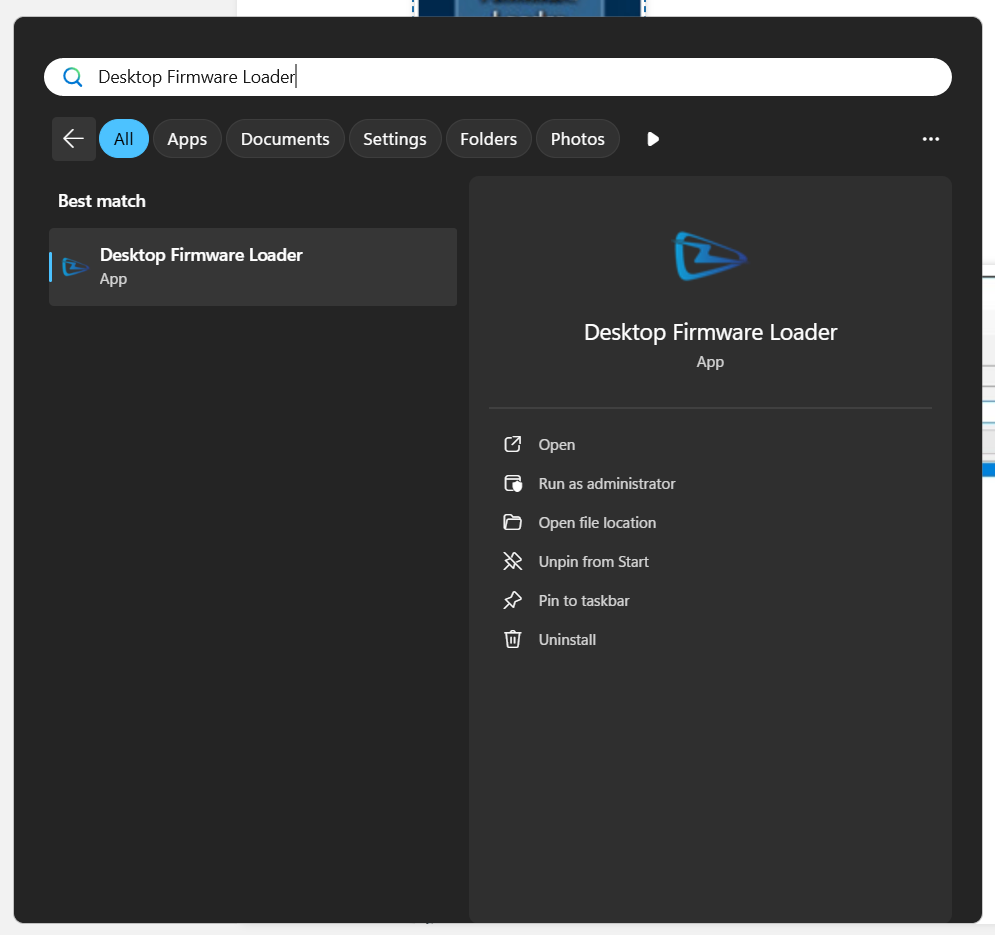
Open the downloaded installer, tsl-desktop-firmware-loader.msi
Follow the setup wizard. If you're asked to allow changes to your computer, select Yes.
Step 3 - Upgrade the firmware
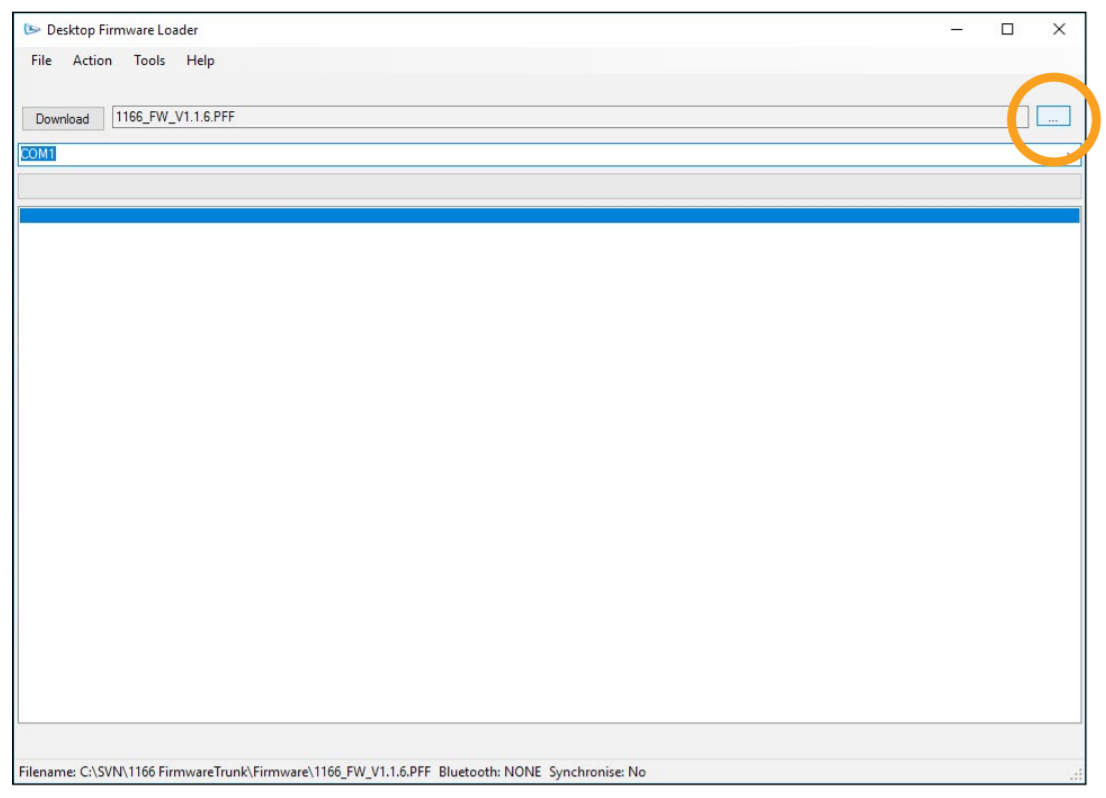
Select “…” to choose the firmware file to download
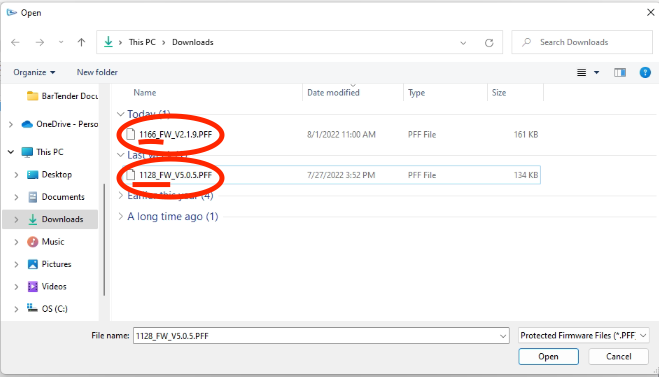
Locate and select the PFF file
Connect the reader to the computer using the supplied USB cable. For TSL 1166 and TSL 2128, you will need to slide your reader into the docking cradle and connect the docking cradle to the computer via USB cable.
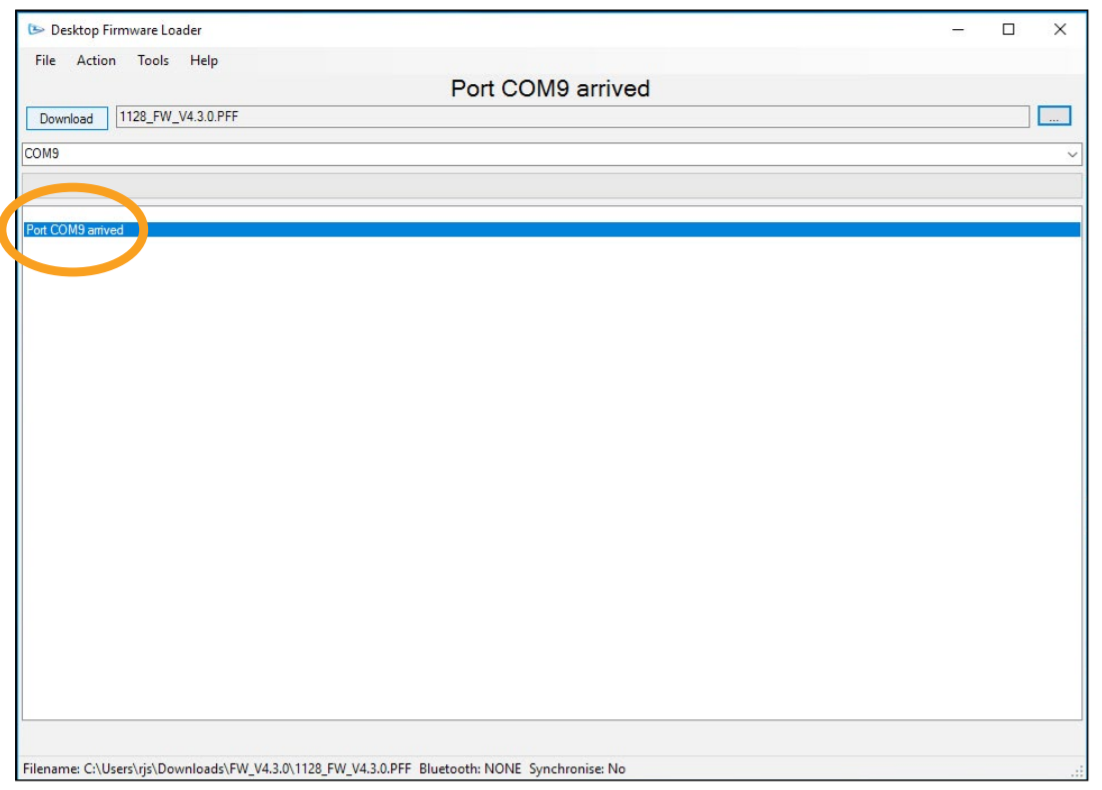
If you don't see a message that a COM port has arrived (e.g. Port COM9 arrived), you may need to use a different USB cable.
Click “Download” to start the update process.
Follow the download instructions.
- You may be asked to wake the reader by pressing the trigger during the update process.
- When you see the message that "Any iOS device must forget and re-pair with this reader before it can be used", the upgrade process is complete.
"Forget" the device from your Bluetooth list in your system settings.
Verify Successful Installation
PLEASE NOTE: After firmware updates, any iOS devices MUST forget the scanner, then complete the pairing process again.
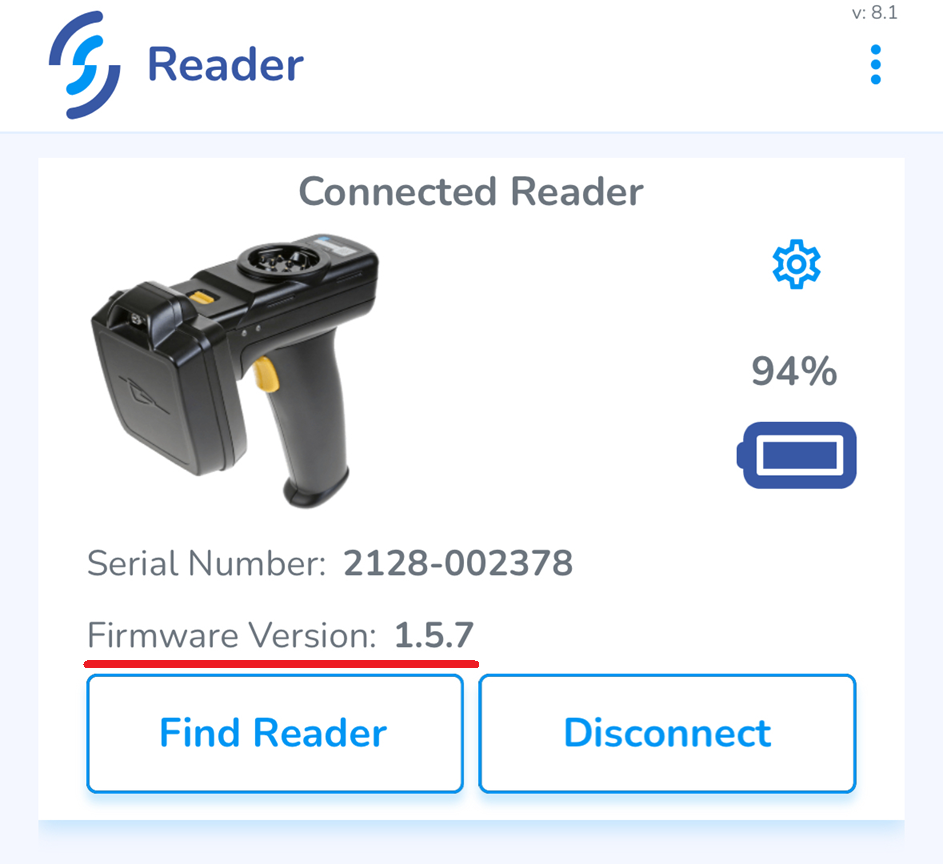
Once you have paired the app you can confirm the firmware version from the Connect Reader screen:
Installing VCP Drivers - Windows for ARM
TSL readers' USB connection uses a Virtual COM port, which requires extra driver installations on Windows for ARM. These are the steps to install the drivers.
Step 1: Install the bus layer driver
First, plug the reader into your PC using the supplied USB cable.
Download the ZIP file containing the drivers and extract the files to any location.
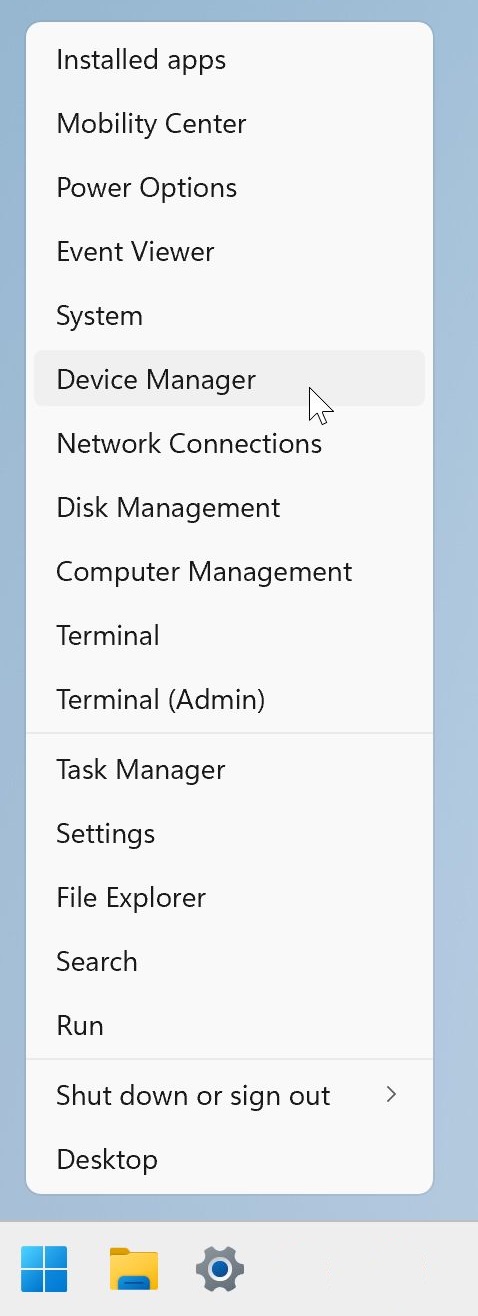
To locate the device manager on Windows 10/11, right click on the Microsoft logo at the bottom left-hand corner of the screen and select Device Manager.
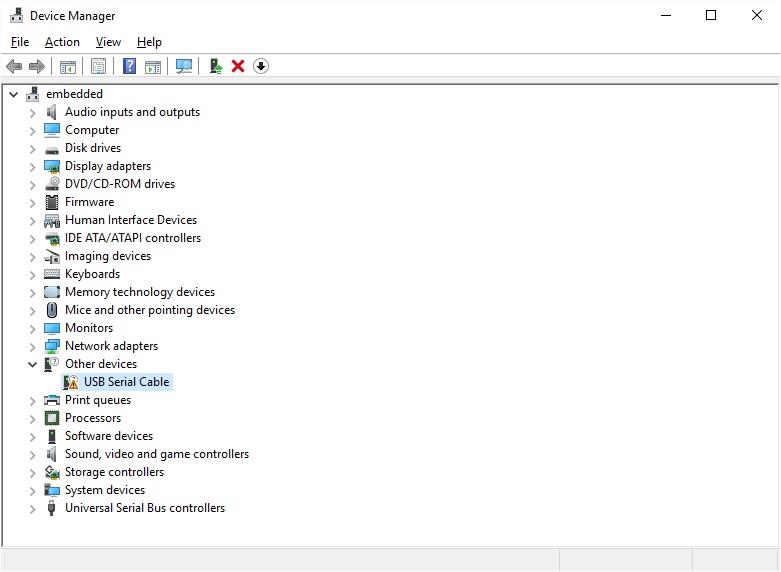
In the Device Manager window there should be a device under Other Devices with a yellow warning symbol to indicate a problem i.e. no driver installed, as shown below.
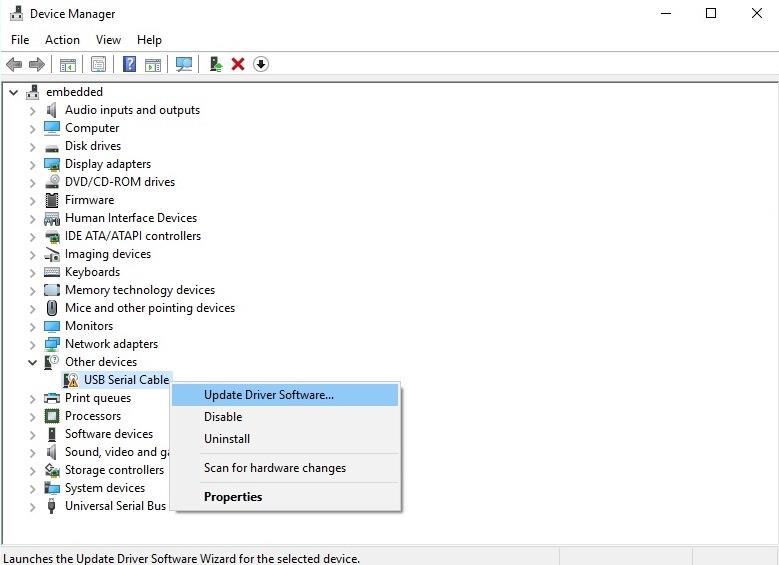
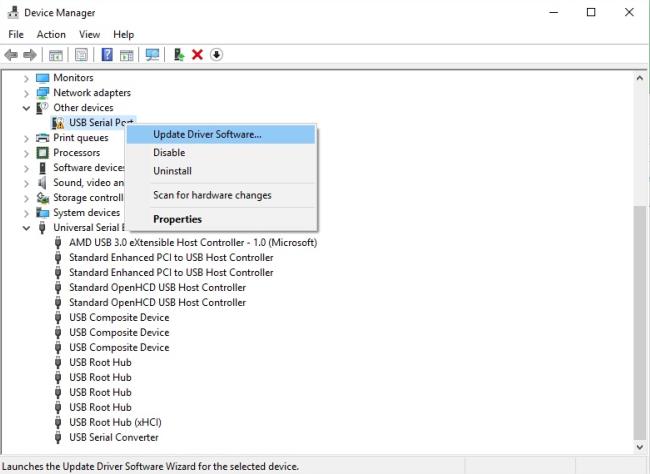
Right click on the device, then select “Update Driver Software…”
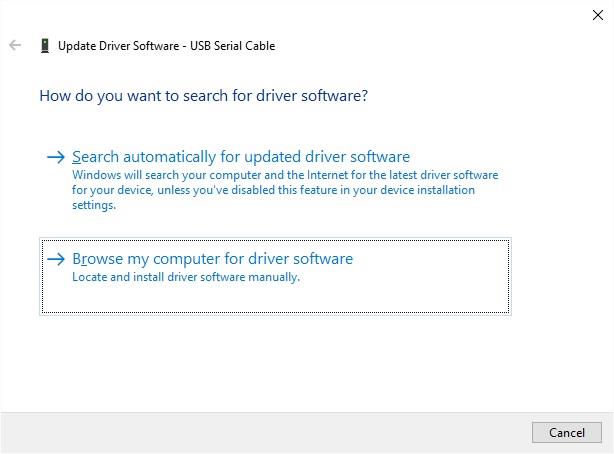
This then displays the option for an automatic search or a manual search. Select the second option to browse manually.
Click Browse... and select the top-level folder of the extracted files (the location shown in the screenshot will not necessarily be the same as the location you choose).
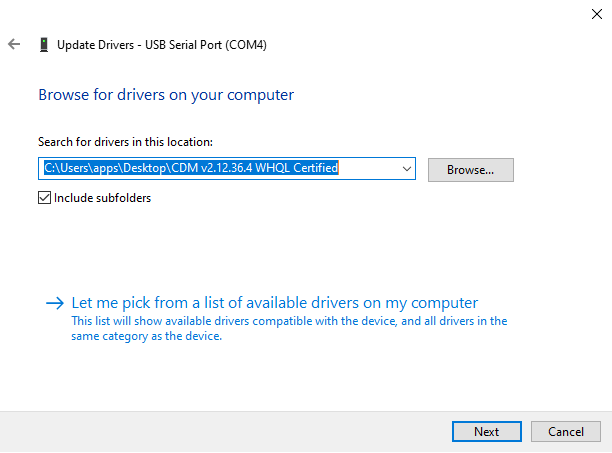
Select “Next” to start the installation.
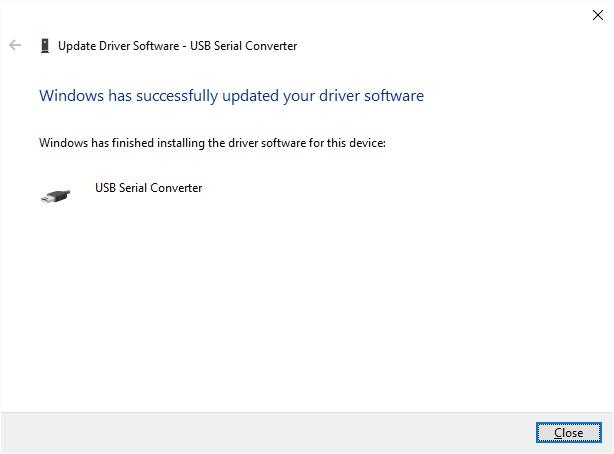
When the installation has finished a completion screen is displayed. Press Close to close this window and go back to the Device Manager window.
Step 2: Install the Virtual Com Port layer of the driver
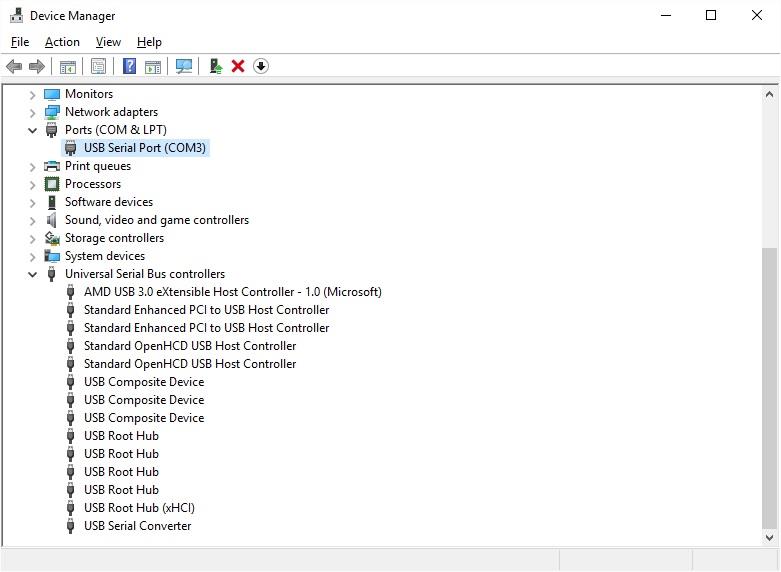
Device Manager will show a device under Other Devices but in addition to this there is a new entry under Universal Serial Bus Controllers as the USB Serial Converter. This indicates the bus layer of the driver is installed.
Installing the Virtual Com Port layer of the driver is a repeat of the last few steps.
Right click on the other device (USB Serial Por in this example) to bring up a menu as shown below. From the displayed menu select “Update Driver Software…”
This then displays the option for an automatic search or a manual search. Select the second option to browse manually.
Click Browse... and select the top-level folder of the extracted files (the location shown in the screenshot will not necessarily be the same as the location you choose).
Select “Next” to start the installation.
When the installation has finished a completion screen is displayed. Press Close to close this window and go back to the Device Manager window.
This time Device Manager does not have an entry under Other Devices but does show entries under Universal Serial Bus Controllers and Ports (COM & LPT). The image below displays a correct installation. The device is now ready to use.
TSL 2128P
TSL 2128P - Setup
Battery Installation
Your reader may have shipped with the battery already installed.
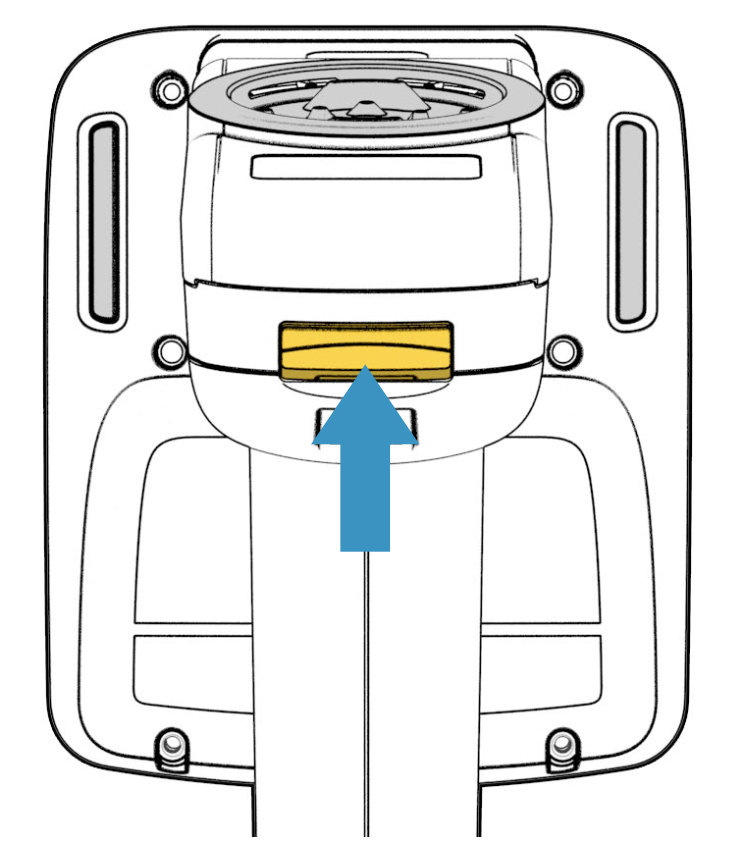
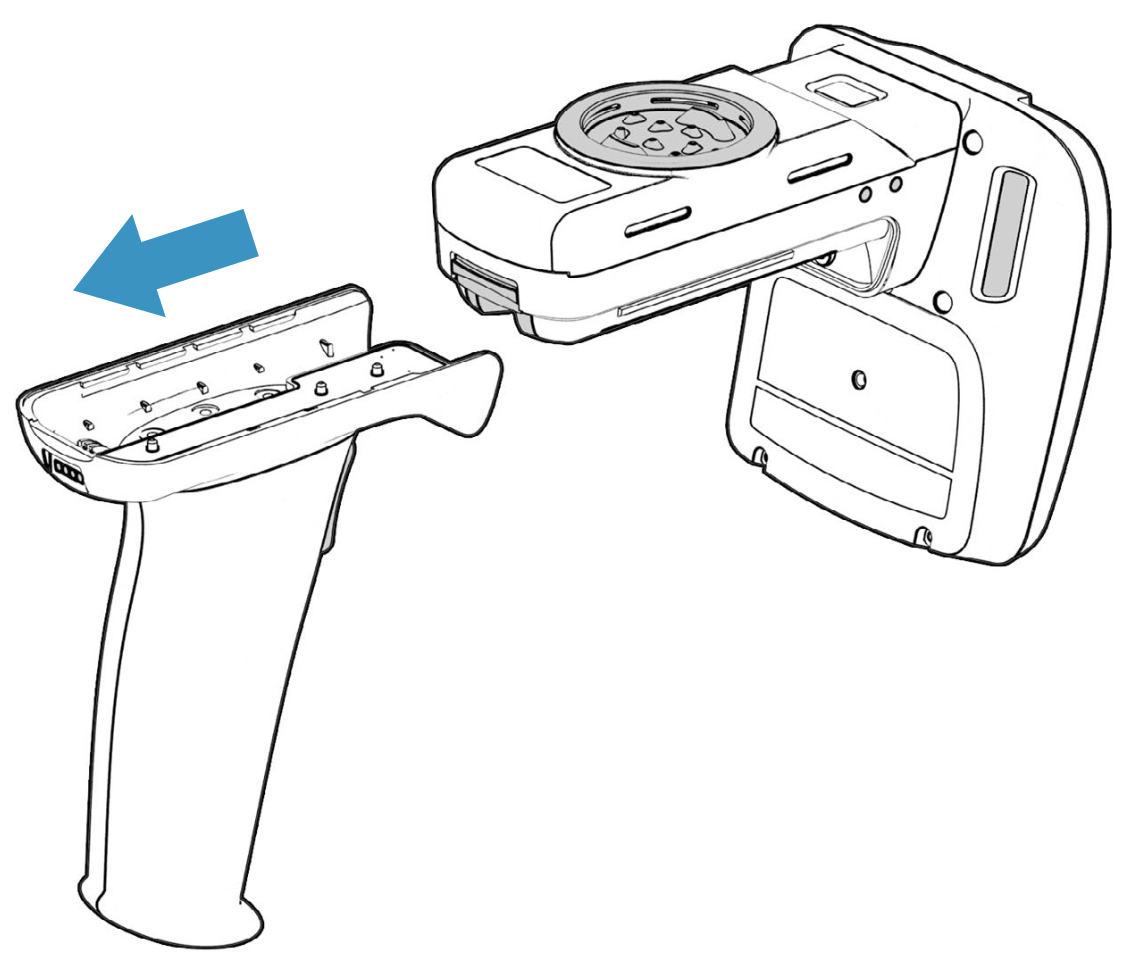
First, lift the yellow latch on the back of the reader, then slide the handle backwards to remove it:
Then, remove the battery cover:
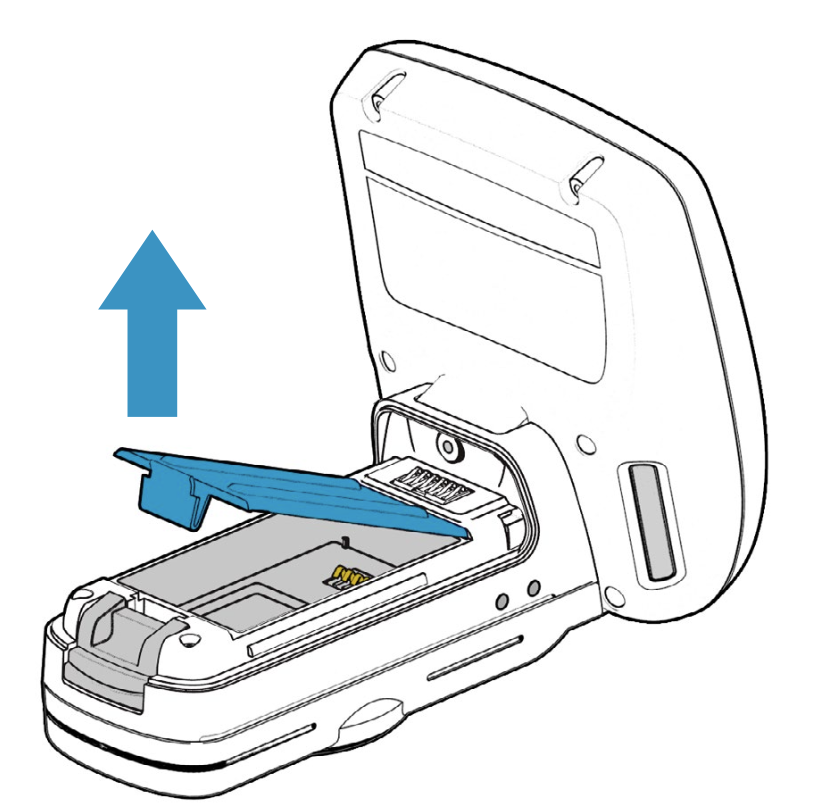
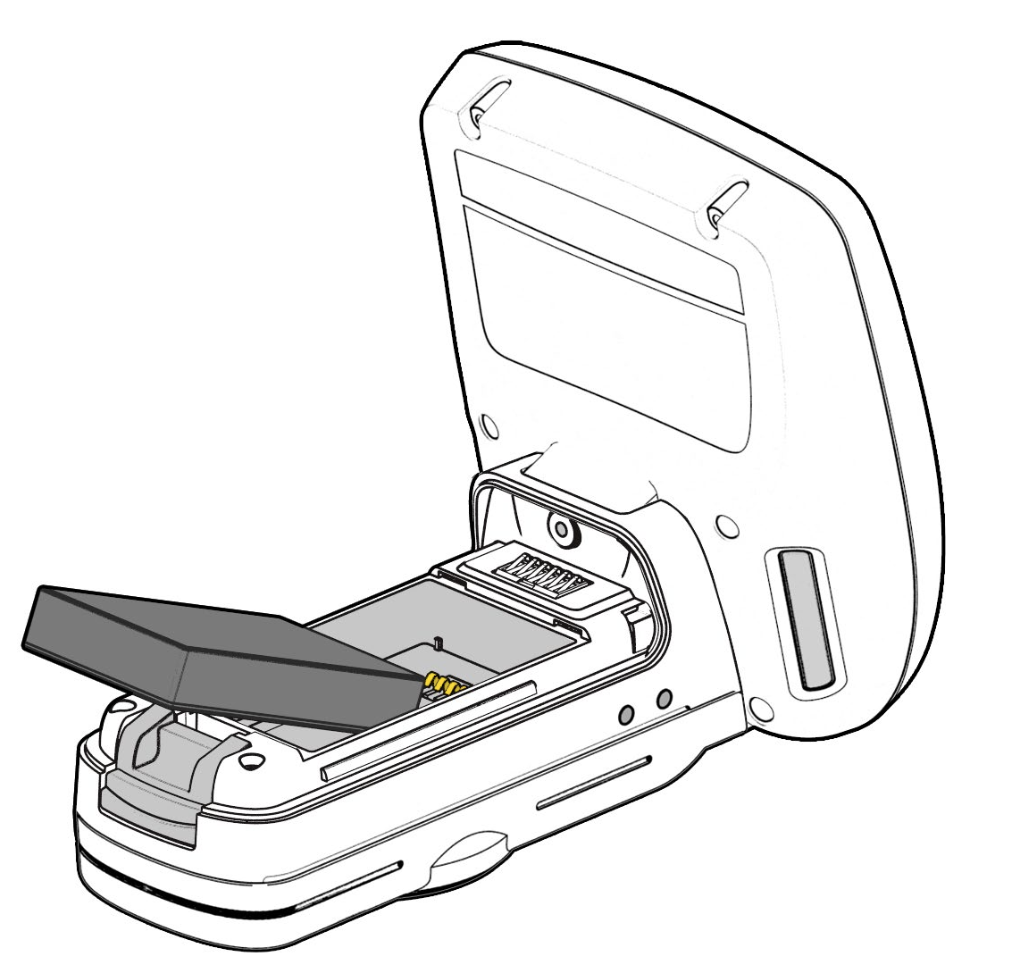
Place the battery in the reader, lining up the pins with the contacts:
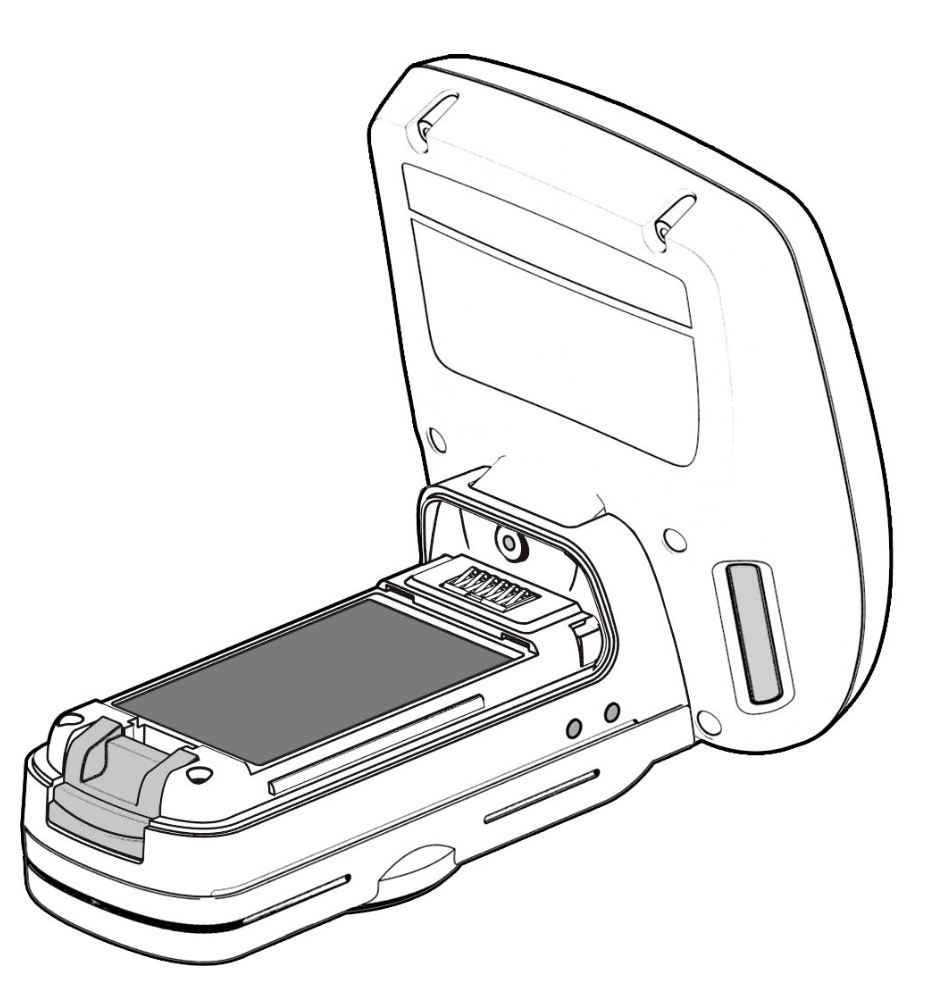
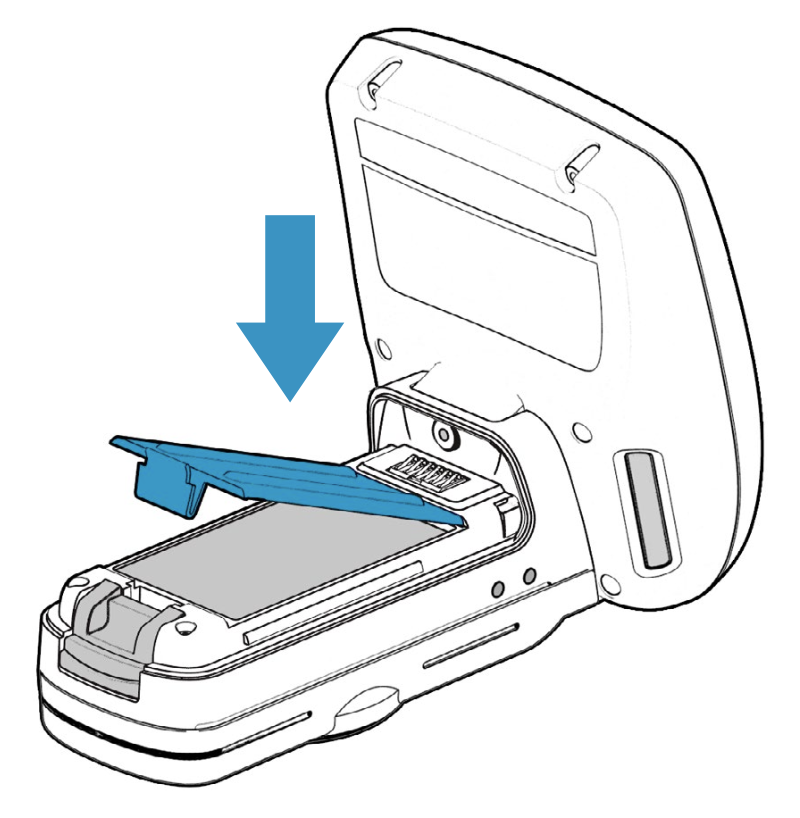
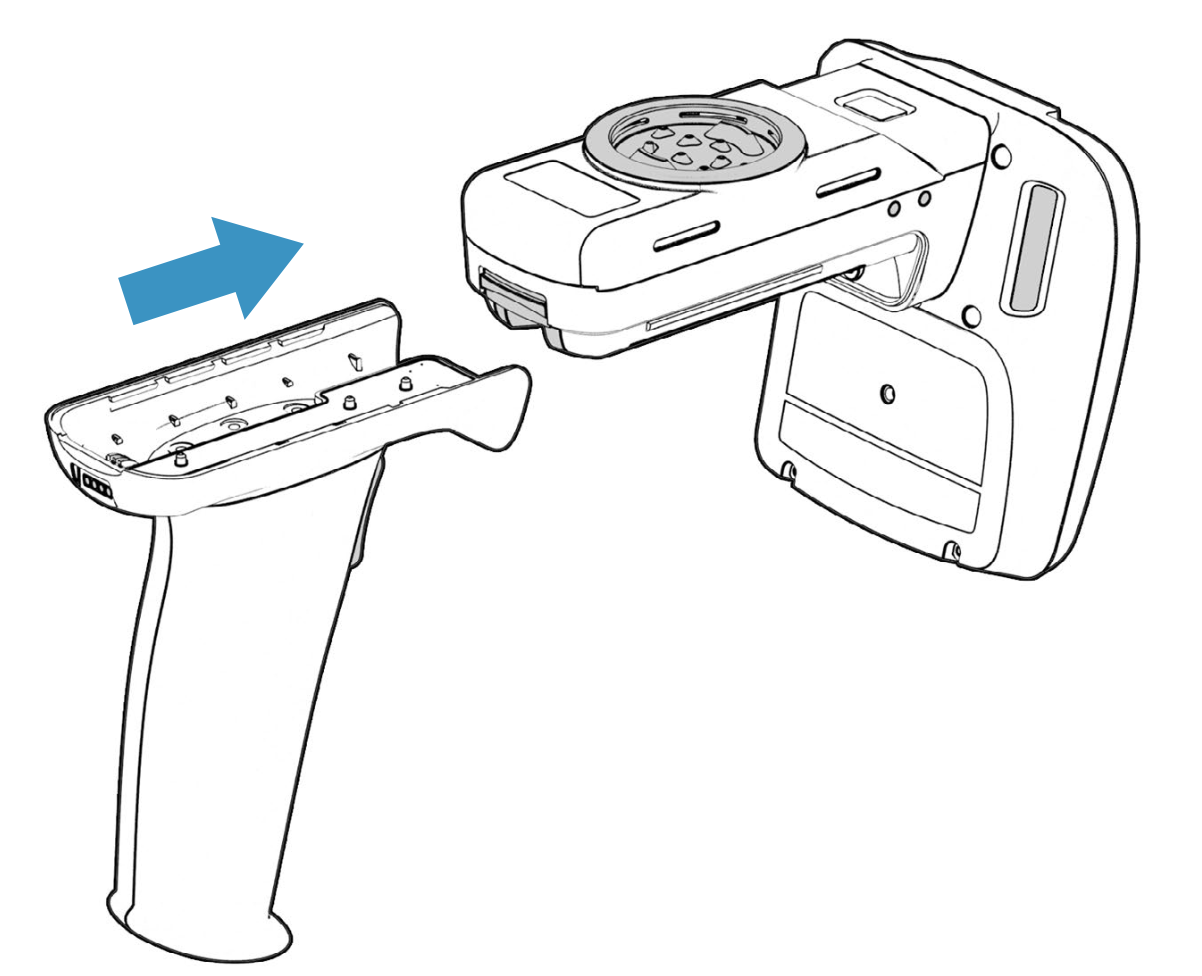
Last, replace the battery cover and the handle:
Next, pair your reader to your device.
All-in-one Reader
Set up MDM
This article describes the process of setting up the reader to get automatic updates.
What is an MDM?
MDM stands for Mobile Device Management. It is software that runs on our UROVO devices, that allows us at Simple RFID to manage the device remotely. This allows us to send automatic updates, and troubleshoot issues. This means that we have visibility on when the device is used. We DO NOT have access to any location data, camera, or microphone. If you have any more questions or concerns about this software, please send a message to the support team.
This will completely reset the reader. If you are using the phone attached to the reader for anything other than Simple RFID, be aware that it will be deleted.
Hard Reset Device
- Open the Settings app
- Scroll down to the bottom and select System
- Scroll down and select Reset options
- Select Erase all data (factory reset)
- Select Erase all data
- Select Erase everything & Reboot

It will reset to the factory default settings. This may take a few minutes. After it is reset, you will see a screen that says Hi There
Do not select Start. If you do, set up the phone and reset again to get on this page.
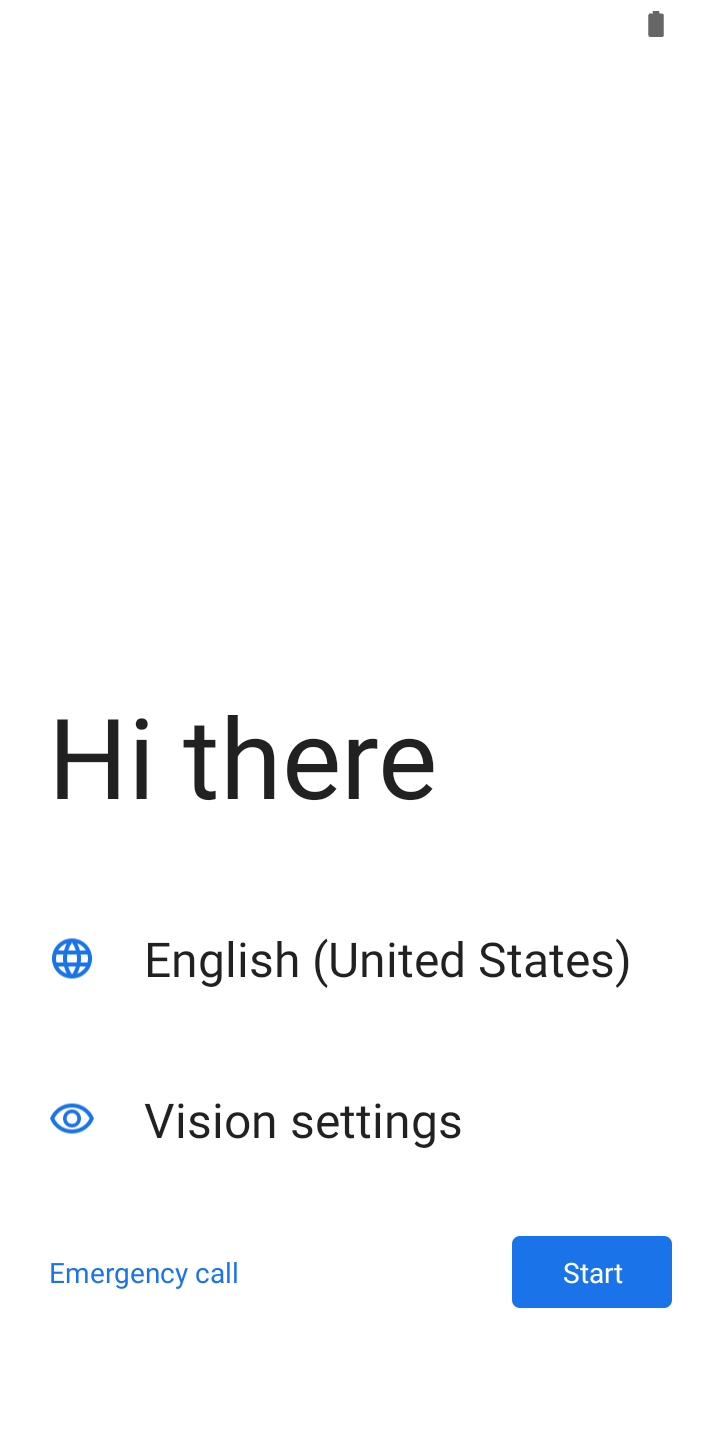
Tap the screen above the text 7 times in rapid succession. This will pull up a camera that is looking for a QR code. Scan this QR code:
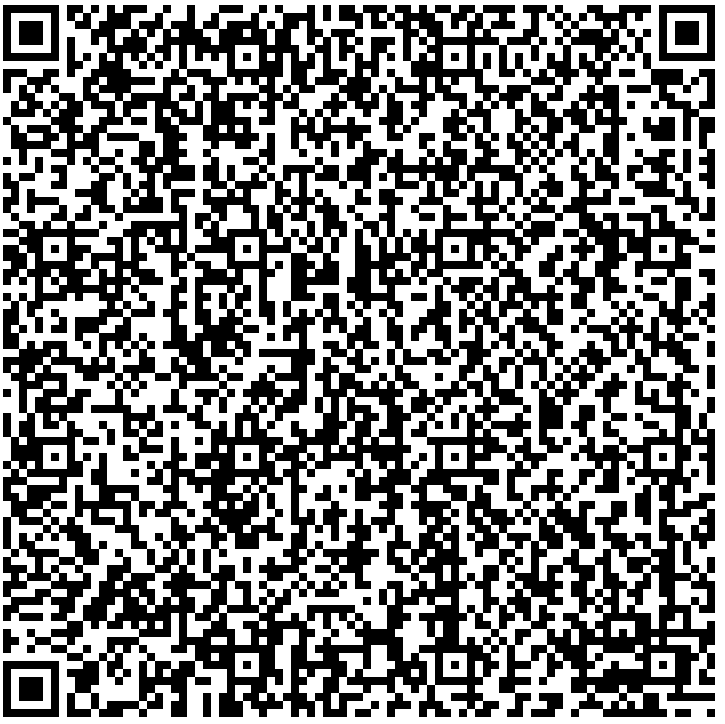
This will download our software, and allow us to keep track of the reader. Accept all of the prompts, and you are all set!
Set Up Device
This article describes the process of installing the battery when your All-In-One reader arrives.
Instructions
The battery is included in the packaging along with the reader.
1. On the bottom backside of the reader, unlock the handle
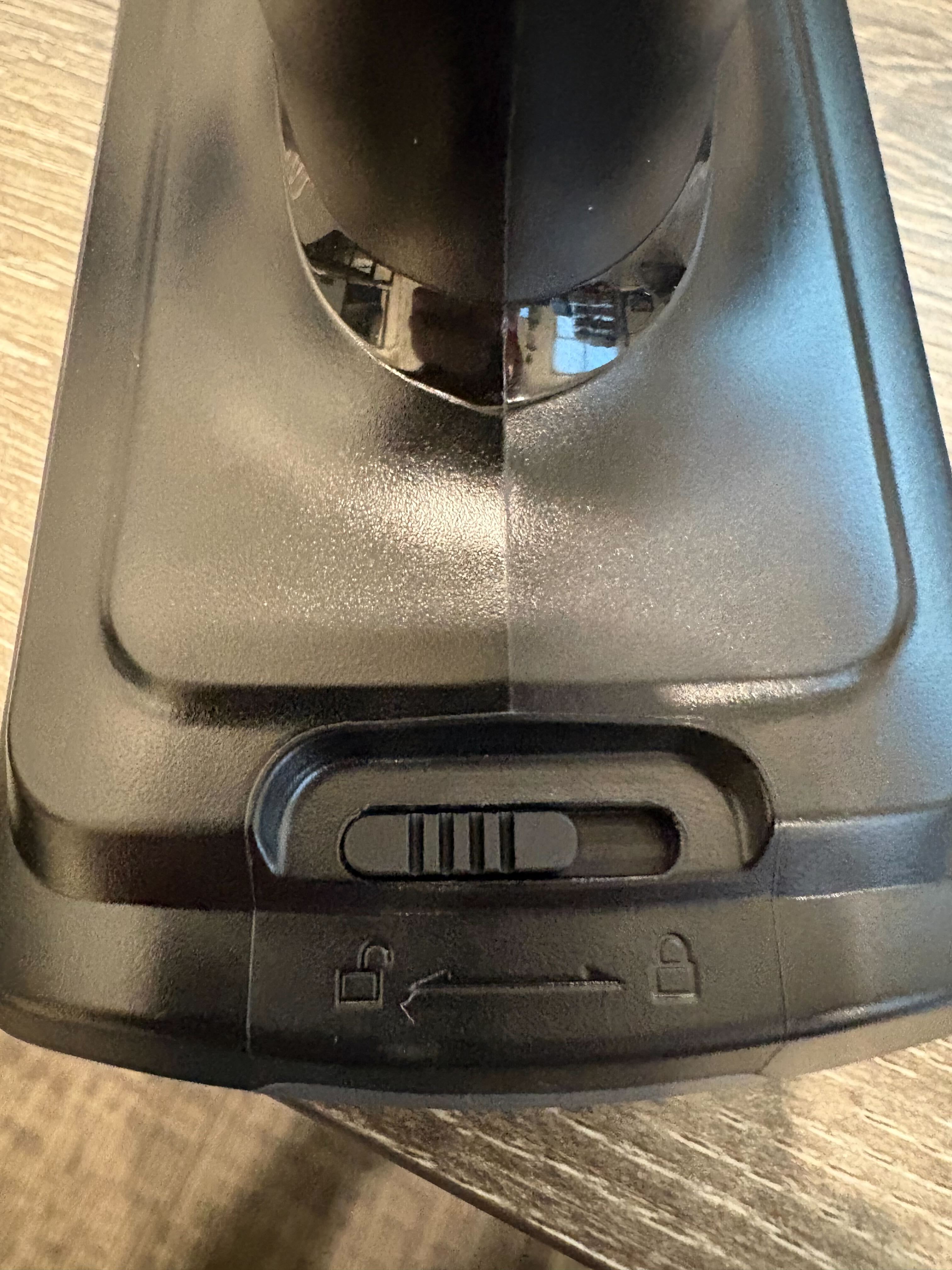
2. Pull the handle off of the reader. It might take some force.
3. Install the battery inside the red rubber band. Ensure that the arrows on the battery are facing towards the top of the reader.

4. Put the handle back on the reader and lock it
5. Hold the power button on the top of the phone until it buzzes
The Simple RFID app should be preinstalled and ready to use on the home screen.
You will need to connect to your WiFi network in the settings on the reader.